A publication about a subject that interests me
Most people do certain things because they’re popular or considered cool.
Others do them because it’s part of their way of life.
I decided to create a publication about cultural appropriation to show that it’s okay
to engage with certain cultural elements—but it’s important to understand where they come from.
That’s exactly what this book is about.

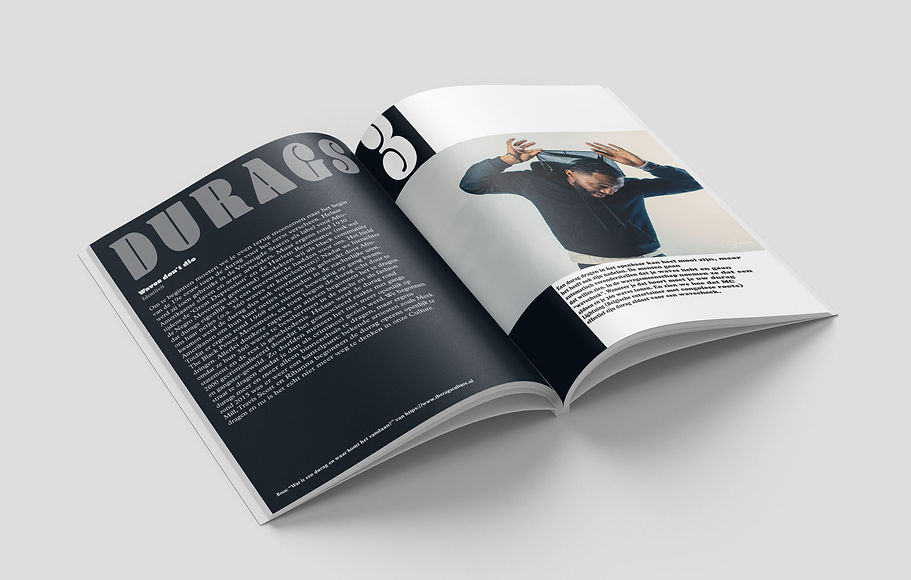
One of the topics I discuss is the durag. Everyone knows what a durag is, but not everyone knows its origin.
A durag is a piece of headwear that many Black people wear before going to sleep.
It protects the hair and helps create a specific hairstyle known as 360 waves.
That’s the main reason why we wear durags. Another reason is that it can "save" you on a bad hair day—especially when you haven’t had a haircut. Instead of looking messy, you can wear a durag that matches your outfit and still look presentable. But before the durag became a fashion item, it had a painful history.
During slavery, durags were used to identify enslaved people.


We are now at a point where the Black community has truly had enough.
To this day, there is still police brutality and a lack of justice for Black people.
We are tired. Enough is enough. It’s time to make real change.
Don’t just embrace our culture when it’s convenient—stand with us in the fight for justice and equality.
All lives can’t matter if Black lives don’t.
